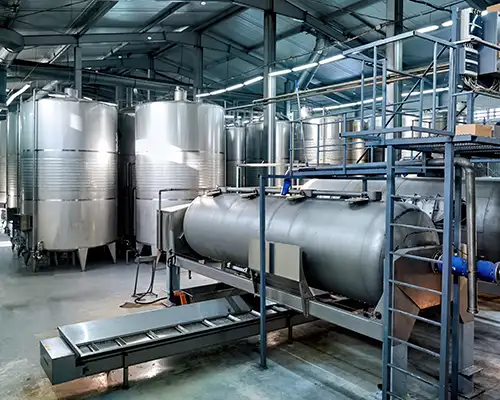
Consistent process performance in the paper industry depends on mixing and dosing equipment matched to actual operating conditions – pulp agitation in stock preparation, precise chemical dosing in bleaching sequences, retention aid addition at the wet end, and water chemistry control across effluent treatment systems.
Get any of these wrong, and the consequences show directly in paper quality, chemical consumption, and machine runnability.
Whether you operate a kraft pulp mill, a recycled fibre plant, or an integrated paper and board facility, agitators and dosing systems need to match the actual fibre characteristics, chemical demands, and process conditions involved. Not a standard catalogue selection.
Where Premix Equipment Is Used
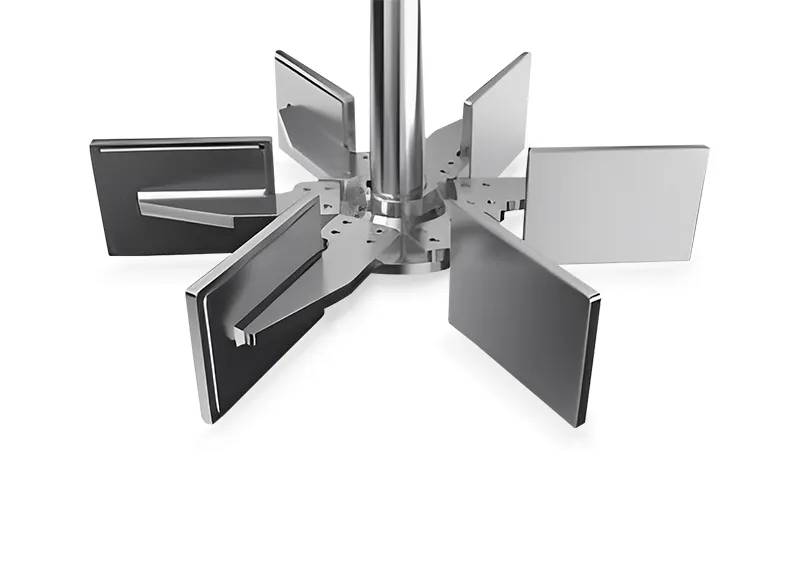
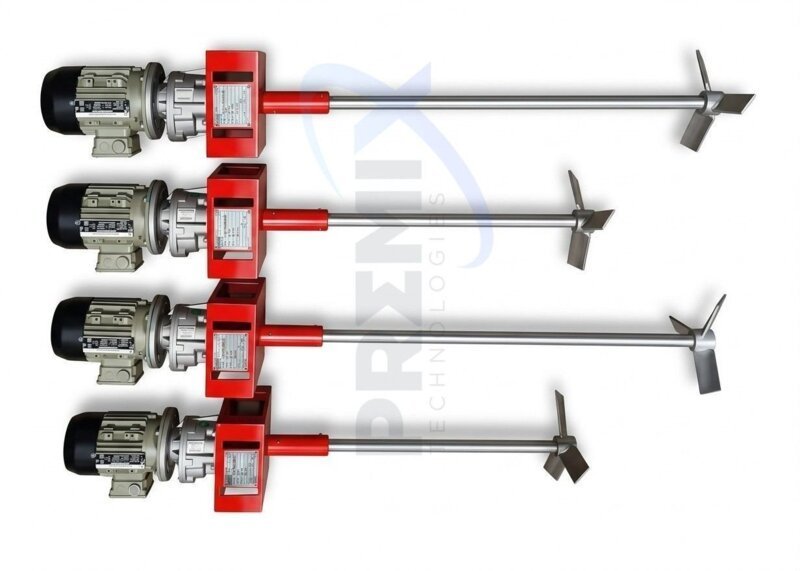
Side entry and long shaft paddle agitators for substrate movement and floating layer control.
Agitators for uniform circulation and stable biological activity.
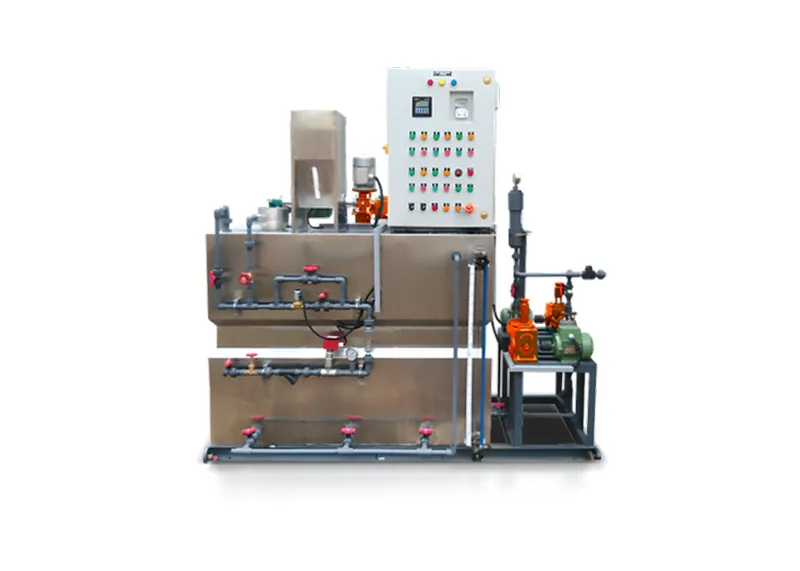
Dosing pumps and systems for pH adjustment, antifoam and treatment chemicals.
Stock chest agitators that fail to maintain uniform fibre suspension create consistency variations at the headbox – showing up directly as basis weight variation across the sheet. Bleaching tower mixing without proper chemical distribution leaves unlignified fibre zones that reduce brightness and increase chemical demand in subsequent stages. Broke chest agitation in paper machines controls repulped fibre quality and directly affects the proportion of broke that can be reintroduced without affecting runnability.
Applications include:
Retention aid dosing at the wet end controls filler and fibre retention on the wire – underdosing increases white water solids loading and filler loss, overdosing creates flocculation problems that show up as formation defects in the sheet. Biocide dosing in white water circuits controls slime-forming bacteria that cause sheet breaks and machine contamination. Sizing agent and starch dosing control surface properties and internal bond strength directly.
Chemicals commonly dosed include:
Stock Chest Agitation
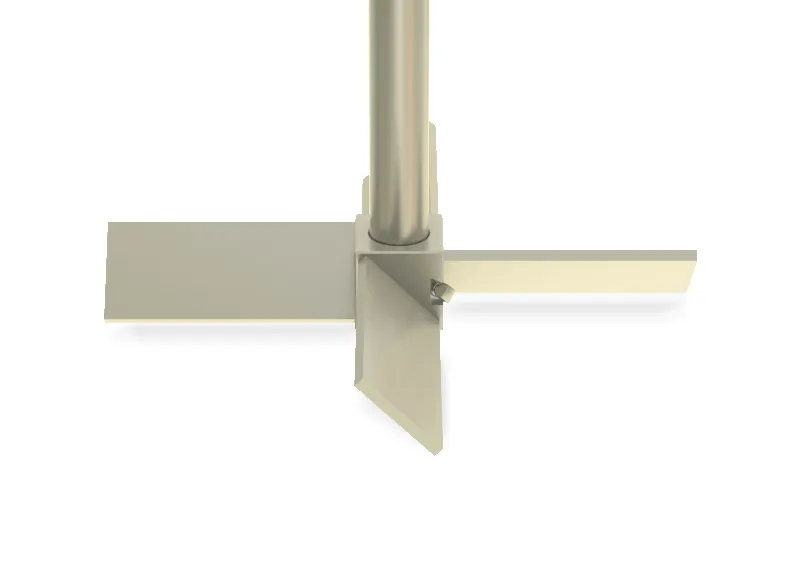
Fibre suspension in stock chests behaves differently from most industrial fluids – it has yield stress characteristics that change with consistency and fibre length. Agitators sized on standard liquid mixing principles routinely fail to mobilise the full chest volume. Impeller geometry, rotational speed, and positioning relative to chest geometry all need to be matched to actual stock consistency and fibre type – not generic mixing calculations.
Bleach Chemical Distribution
Chlorine dioxide and peroxide distribution in bleaching towers depends on mixing quality at the point of chemical addition. Poor initial distribution creates channelling – some fibre gets overtreated, some undertreated – increasing chemical consumption and reducing final brightness. Getting this right is a nozzle placement and initial mixing problem, not a tower design problem.
Retention Aid Dosing Point Control
Retention aid performance is highly sensitive to dosing point location and shear conditions downstream of addition. The same chemical at the same dose rate gives completely different retention results depending on where and how it enters the system. Dosing system design here is inseparable from process point selection.
Have a paper industry stock chest agitation project, a wet end chemical dosing system, or a bleaching sequence mixing requirement? We give straight answers – no catalogue quoting without understanding your process first.
+91 89056 16775 | +91 73831 46106
Delivering precision-engineered mixing and dosing solutions across diverse industrial sectors with reliability and performance.
Stock chest agitation, broke chest mixing, bleach chemical distribution, retention aid dosing, white water biocide treatment, coating colour agitation, and effluent treatment – across kraft pulp mills, recycled fibre plants, and integrated paper and board facilities.
Yes – configured specifically for fibre suspension service, with impeller geometry and drive sizing matched to actual stock consistency range and chest geometry rather than standard liquid mixing criteria.
Precise low-pulsation dosing systems for retention aid, sizing agent, and biocide addition – with accurate output at low flow rates, stable metering across varying back-pressure, and materials compatible with the specific chemicals handled.
Have questions about our products or need a customized solution? Our team is ready to assist you with expert guidance, technical support, and reliable service. Reach out to us today and let’s build efficient solutions together.