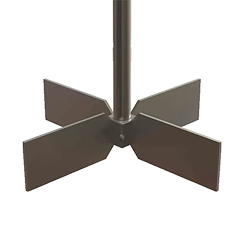
| Parameter | Specification |
|---|---|
| Impeller Type |
Central / off center Baffles: 0 / 2 / 3 / 4 Blades: 2 / 3 / 4 Stages: 1 |
| Flow Direction | Upward |
| Preferred Arrangement | Center Mounted |
| Blending | • • • |
| Suspending | • • • |
| Dispersing | • • |
| Heat Transfer | • • • |
| Gassing | • • |
| Flow Range | Turbulent / Transitional |
| Viscosity Range | 1 - 50,000 |
| Features |
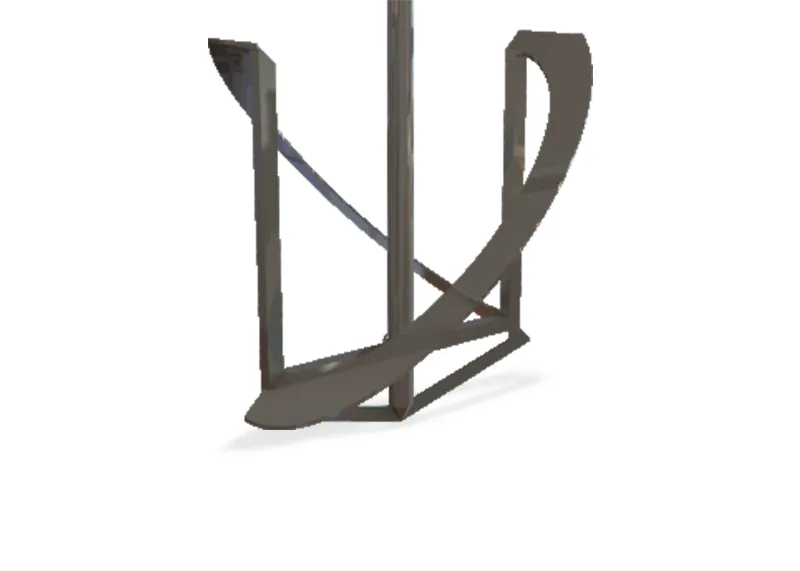
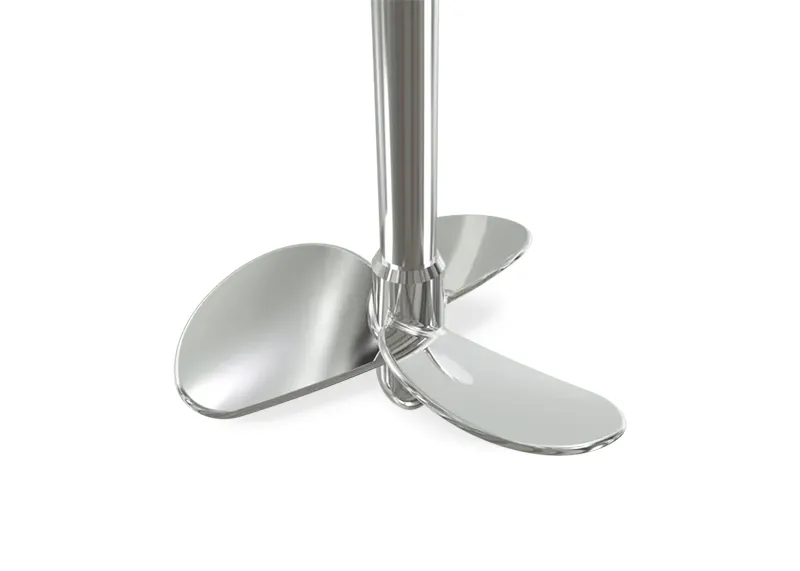
- Universal mixing impeller for a wide viscosity range - Variable blade angles (standard versions with 30° and 45°) |
| Diameter Ratio | 0.5 - 0.8 [d1 / d2] |
| Speed | 300 - 1500 |
| Tip Speed | 5 - 20 [ft/s] |
Legend: • • • = high effectiveness / • • = moderate effectiveness / • = low effectiveness
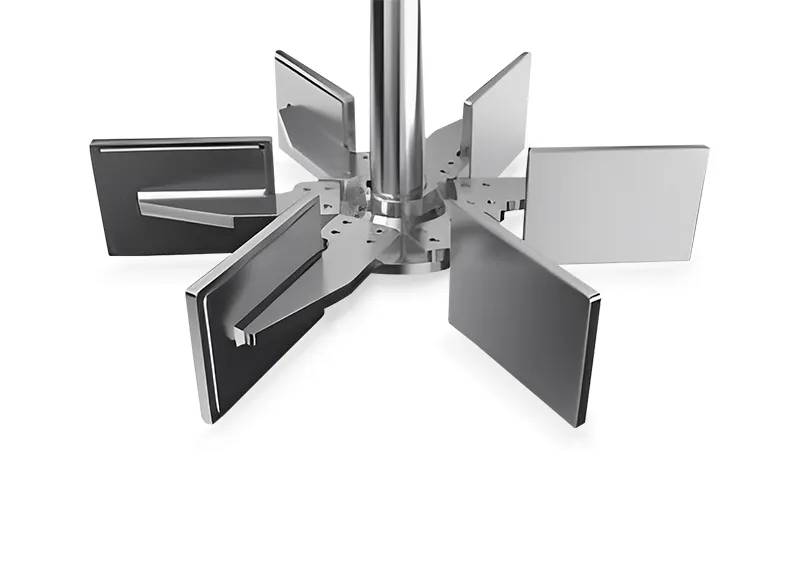
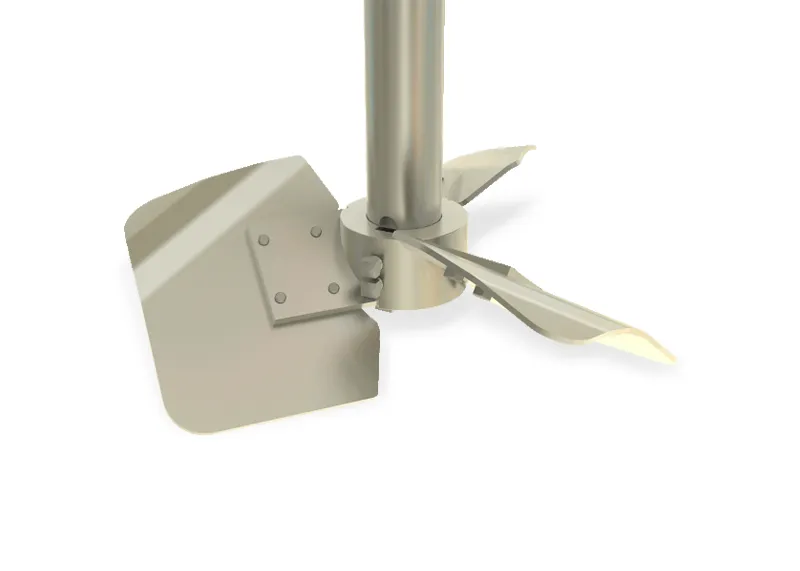
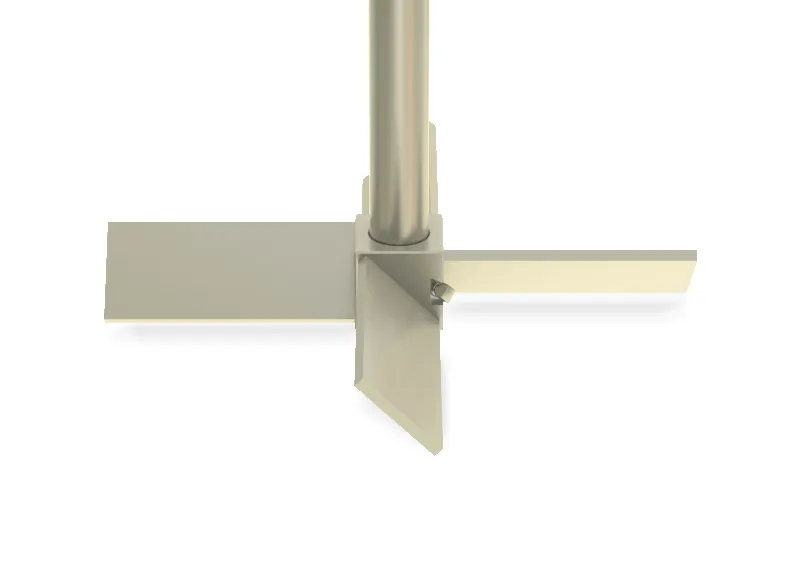
Turbine agitators, also known as radial flow impellers, are a common type of impeller used in various industrial mixing applications. They are characterized by their multiple flat blades extending radially from a central hub. Here are some key features of turbine impellers:
Overall, turbine impellers offer a balanced combination of flow characteristics, moderate shear, and versatility, making them a popular choice for various mixing applications across different industries. However, the specific suitability of a turbine impeller for a given process depends on the fluid properties, process objectives, and vessel geometry, which should be carefully evaluated during the agitator selection process.
Delivering precision-engineered mixing and dosing solutions across diverse industrial sectors with reliability and performance.
Computational Fluid Dynamics (CFD) helps our engineering team study how the impeller moves liquid inside a tank before finalizing agitator speed, impeller diameter, shaft position and baffle arrangement. For industrial impellers, CFD visualization is useful for reviewing circulation, velocity distribution, turbulence level and possible dead zones.
At Premix Technologies, CFD review supports practical agitator and impeller selection for blending, solid suspension, heat transfer, gas dispersion, slurry handling and process mixing applications. The video below demonstrates how flow lines and velocity distribution can be reviewed to improve mixing efficiency and reduce uneven circulation inside the vessel.
Have questions about our products or need a customized solution? Our team is ready to assist you with expert guidance, technical support, and reliable service. Reach out to us today and let’s build efficient solutions together.