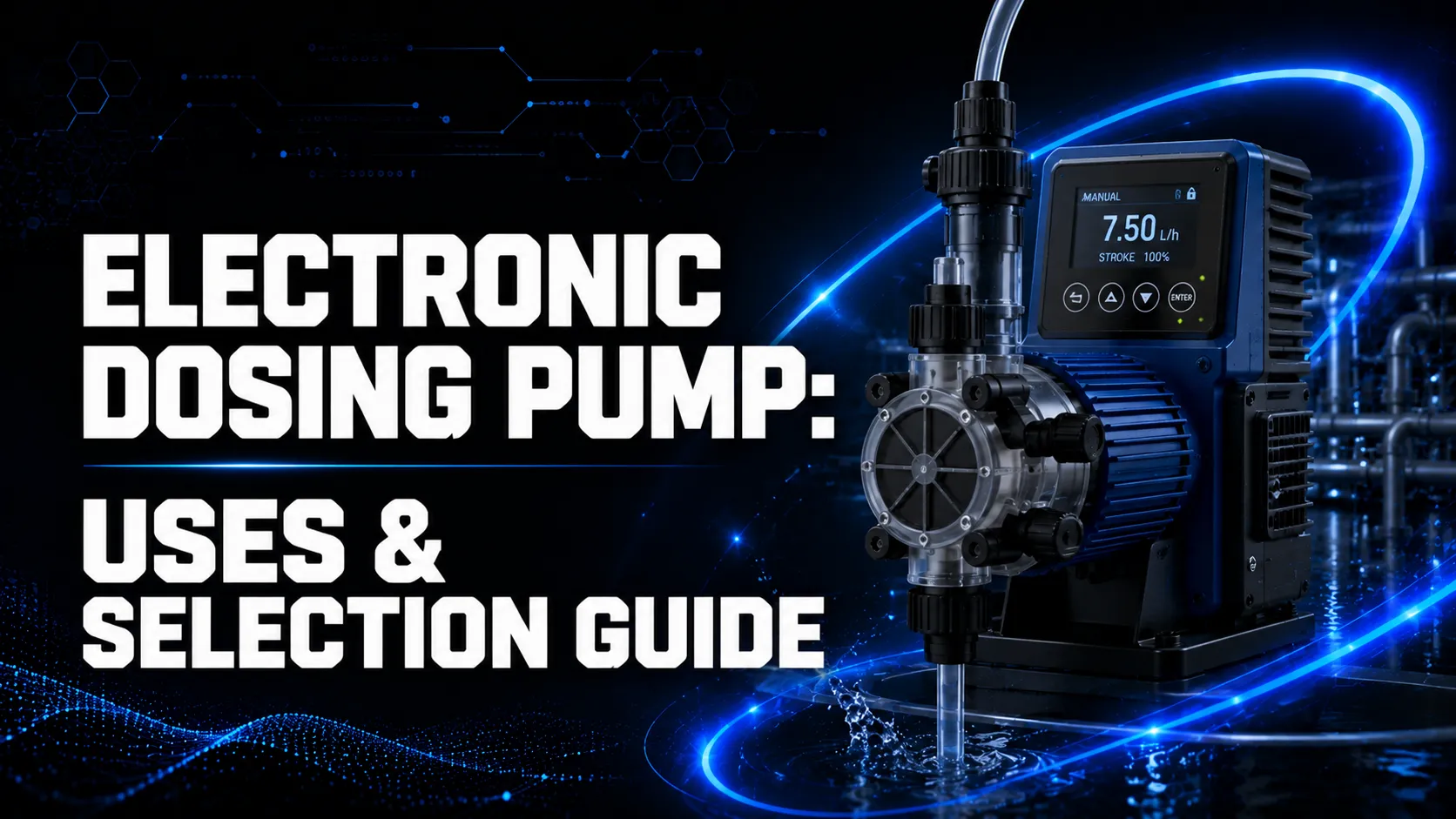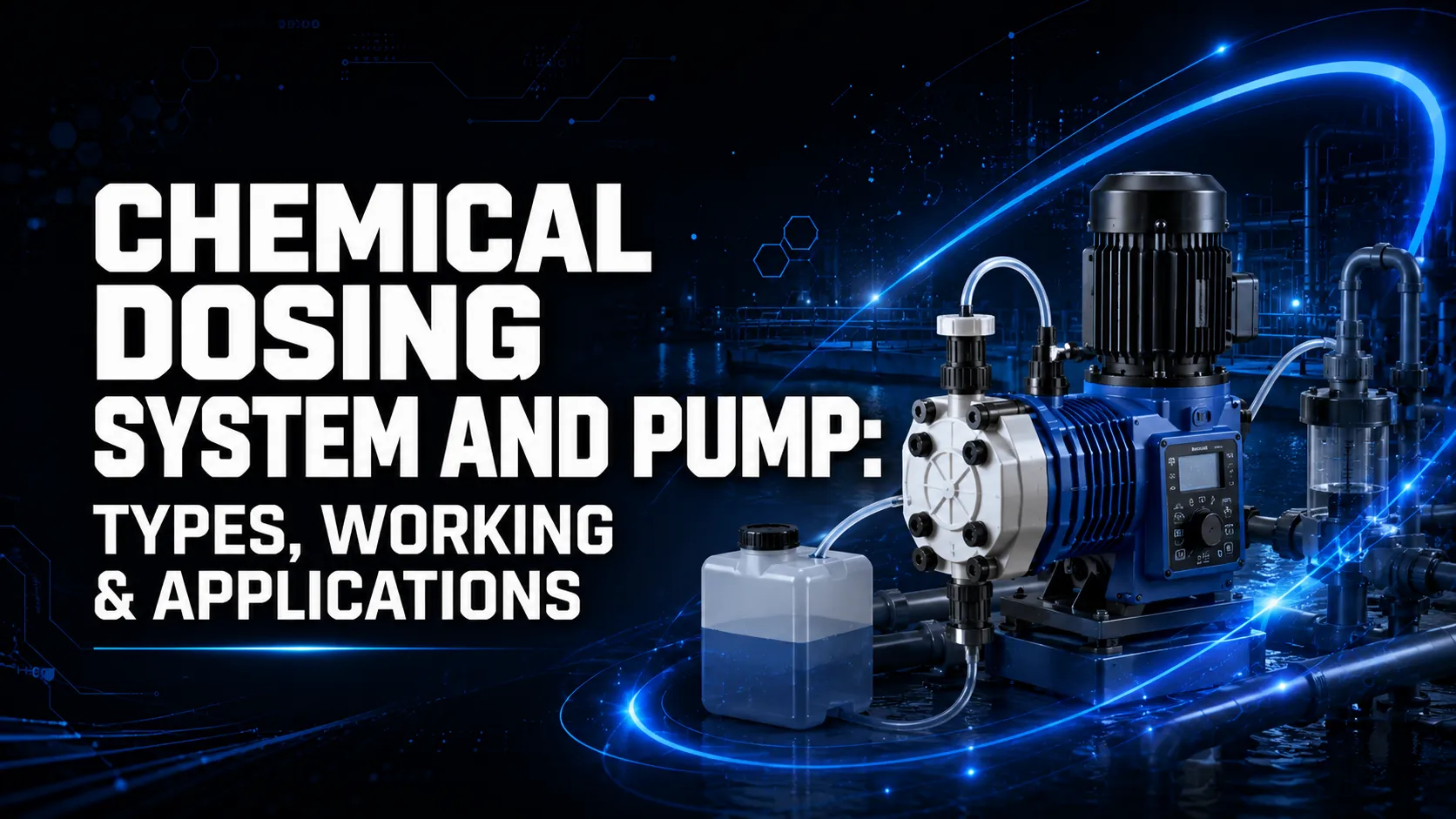
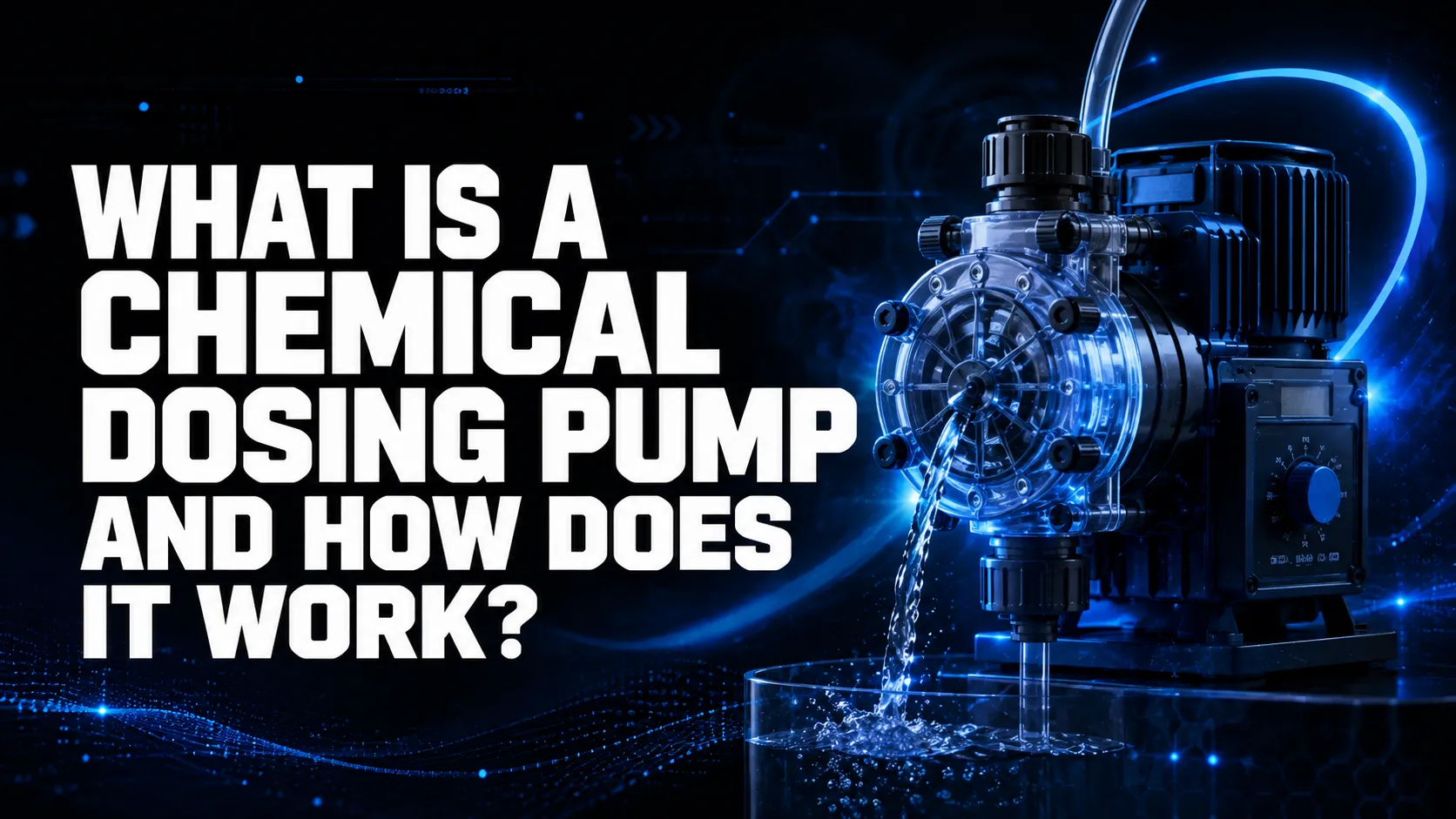
A chemical dosing pump injects a fixed amount of chemical into water at a controlled rate. That is its entire job, and yet almost everything about safe water treatment rests on it. Plants use this pump to add chlorine, coagulants, or pH-correcting agents into raw water before it reaches homes and factories.
No operator can match this kind of precision by hand. A motor drives either a diaphragm or a piston inside the pump, pulling chemical from a storage tank and pushing it into the main line. Some pumps still run on manual settings. Others adjust the dosing rate on their own once flow conditions change. Plants built recently tend to favour a chemical dosing pump with digital controls, mostly because the accuracy is hard to argue with.
How Does a Chemical Dosing Pump Work in Water Treatment?
It works through a repeated stroke cycle. Suction pulls chemical in from the tank, then discharge forces it out into the water line through a check valve. Round and round it goes.
A quick breakdown of the cycle:
- Chemical solution stays in a tank wired directly to the pump.
- Each stroke pulls out a fixed volume, no more and no less.
- That solution then enters the main pipeline through the chemical dosing pump.
- Sensors along the line watch water quality and nudge the dosing rate when something shifts.
If one part of this chain slips, dosing accuracy suffers immediately. That is why plant staff checks the pump often instead of waiting for something to go wrong.
Why Do Water Treatment Plants Need a Chemical Dosing Pump?
Because hand dosing is inconsistent, and inconsistent dosing is dangerous. Too much chlorine causes one set of problems. Too little causes another. A chemical dosing pump removes that guesswork almost entirely.
What does a dependable pump actually give a plant?
- Chlorine levels that stay where they need to be for proper disinfection
- pH correction handled through acid or alkali dosing without someone watching it every hour
- Far less manual labour, and fewer chances for human error to creep in
- Easier compliance with government water quality standards
Municipal plants, industrial units, even residential complexes across India run their daily water treatment through a chemical dosing pump now. It has become the standard, not the exception.
What Are the Types of Chemical Dosing Pumps?
Three types dominate the market: diaphragm, piston, and peristaltic. Each one suits a different kind of chemical and a different kind of workload.
| Pump Type | Best Suited For | Key Feature |
| Diaphragm Dosing Pump | Corrosive chemicals like chlorine | Leak-free design |
| Piston Dosing Pump | High-pressure applications | Strong, durable build |
| Peristaltic Dosing Pump | Viscous or abrasive fluids | Easy to maintain |
Picking the right type of chemical dosing pump usually comes down to two things: what chemical you are dosing, and how fast the water moves through the system.
How Do You Choose the Right Chemical Dosing Pump?
Flow rate matters first. Chemical type comes right after. Plant capacity ties both together, and pressure requirements decide whether a pump will even survive the job.
A short checklist before buying one:
- Make sure the pump material can actually handle the chemical, not just tolerate it for a while
- Match capacity to your real flow rate rather than an estimate someone made years ago
- Favour corrosion-resistant parts, since that decides how long the equipment lasts
- Look for a chemical dosing pump that allows adjustable stroke length as demand changes
Get this match right, and the pump costs less to run and rarely surprises anyone with a sudden breakdown.
What Are the Benefits of Using a Chemical Dosing Pump?
Consistency, above everything else. A chemical dosing pump keeps chemical levels accurate through the whole treatment cycle, which protects water safety and stops chemicals from going to waste.
There is more on offer beyond that one point:
- Lower operational costs since chemicals stop being overused
- Smoother plant efficiency through automated dosing control
- Longer equipment life, because precise handling wears parts down less
- Regulatory compliance that no longer feels like a constant battle
Plants that upgrade to a properly sized chemical dosing pump often recover the cost within months, just from the chemicals they stop wasting.
Where Can You Buy a Reliable Chemical Dosing Pump?
Buy from a manufacturer, not a generic middleman. Premix.isweb.in supplies chemical dosing pumps built for water treatment plants of every size, from small setups to large municipal operations.
A few things worth confirming before you commit:
- Ask what the warranty actually covers, not just how long it runs
- Request material certification for the chemical dosing pump you are considering
- Check whether spare parts and after-sales service are genuinely easy to access
- Compare prices across two or three verified suppliers before deciding anything
Work with a supplier you can trust, and the chemical dosing pump keeps running for years without pulling you back for repairs every other month.
FAQs
It injects a precise amount of chemical into water so treatment stays accurate and consistent.
A diaphragm chemical dosing pump, mainly because it handles corrosive chemicals without breaking down.
Every three to six months is a safe interval to avoid unexpected breakdowns.
Yes, most current models use sensors and controllers to adjust dosing without manual input.
Yes, compact versions exist specifically for small and mid-sized treatment plants.