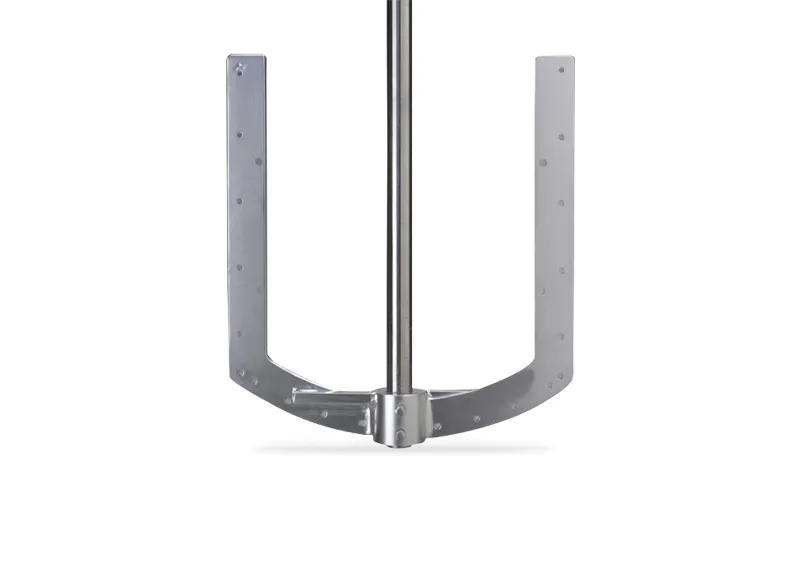
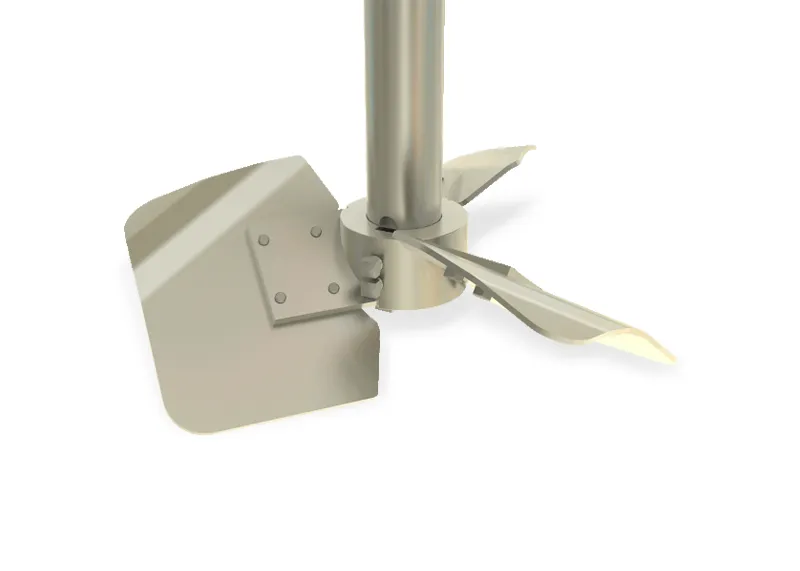
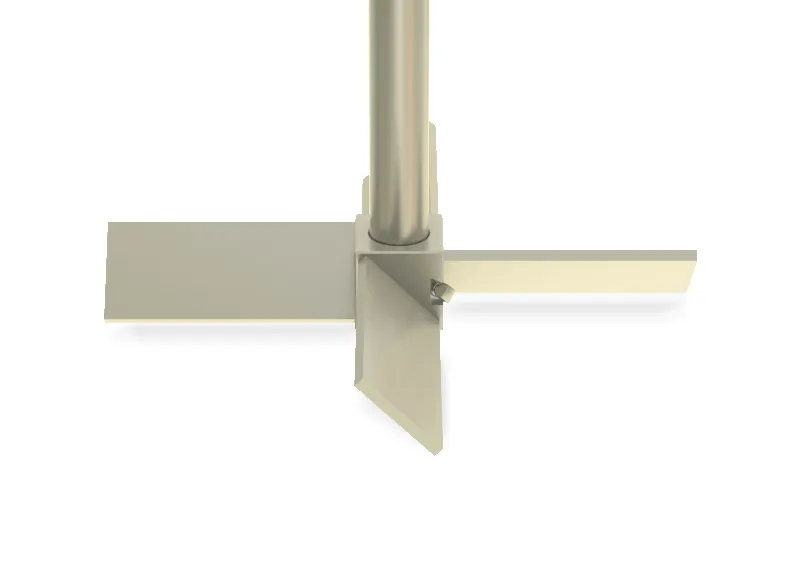
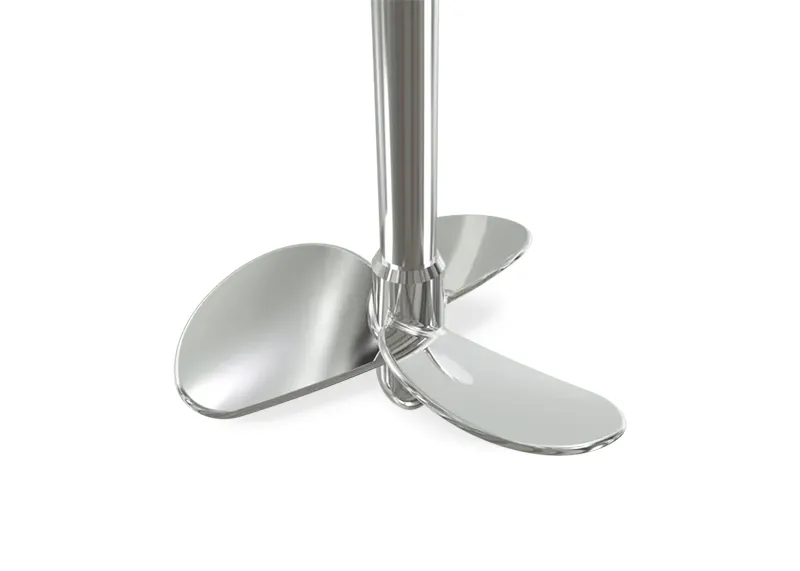
Helical Ribbon Impeller

Sorry, your ID is maybe not correct. And please make sure that your selected element is developed with Swiper.

Technical Parameters
Parameter Specification
Impeller Type Central / off center
Baffles: 0 / 2 / 3 / 4
Blades: 2 / 3 / 4
Stages: 1
Flow Direction Radial
Preferred Arrangement Center Mounted
Blending • •
Suspending • •
Dispersing
Heat Transfer • •
Gassing • •
Flow Range Laminar / Transitional
Viscosity Range 1 - 50,000
Features - Universal mixing impeller for a wide viscosity range
- Variable blade angles (standard versions with 90°)
Diameter Ratio 0.8 - 1.2 [d1 / d2]
Speed 20 - 150
Tip Speed 1 - 5 [ft/s]

Legend: • • • = high effectiveness / • • = moderate effectiveness / • = low effectiveness

Features of Anchor Impellers

Anchor agitators, also known as gate agitators or gate blade agitators, are a type of radial flow agitator commonly used in various industries. They are characterized by their anchor-shaped blades that create radial flow patterns within the mixing vessel. Here are some key features and characteristics of anchor impellers:

Due to their effective mixing capabilities in handling viscous materials and promoting solids suspension, anchor impellers are commonly used in industries such as chemical processing, pharmaceuticals, food and beverage, pulp and paper, water treatment, and various other applications involving high-viscosity fluids and mixtures.

Use In Industry

Delivering precision-engineered mixing and dosing solutions across diverse industrial sectors with reliability and performance.

CFD Assisted Impeller

Computational Fluid Dynamics (CFD) helps our engineering team study how the impeller moves liquid inside a tank before finalizing agitator speed, impeller diameter, shaft position and baffle arrangement. For industrial impellers, CFD visualization is useful for reviewing circulation, velocity distribution, turbulence level and possible dead zones.

At Premix Technologies, CFD review supports practical agitator and impeller selection for blending, solid suspension, heat transfer, gas dispersion, slurry handling and process mixing applications. The video below demonstrates how flow lines and velocity distribution can be reviewed to improve mixing efficiency and reduce uneven circulation inside the vessel.

What We Check During CFD Review

Why It Matters for Customers

Related Products

1 Step 1
Contact Form
keyboard_arrow_leftPrevious
Nextkeyboard_arrow_right
FormCraft - WordPress form builder

Get in Touch

Have questions about our products or need a customized solution? Our team is ready to assist you with expert guidance, technical support, and reliable service. Reach out to us today and let’s build efficient solutions together.